“I neither know nor think that I know.”
In plain words: The only thing I know for sure is where my knowledge ends.
Socrates, in Plato’s Apology, 21d, translated by Benjamin Jowett
On the cover I asked why being right can make you poorer. Here is the first answer. It is rarely being right that costs you. It is feeling right. Four winning trades, and the fifth is twice the size, without a stop. The second answer, how you can win eight trades in ten and still lose the account, waits for you in Dialogue V.
2 · The storyThe wisest man in Athens was the one who knew he wasn’t.
Years before his trial, his friend Chaerephon travelled to the Oracle at Delphi and asked whether anyone was wiser than Socrates. The answer was no.
Socrates was puzzled. He knew he was not wise. So he did what any good analyst does with a surprising result: he tried to disprove it. He went looking for someone wiser.
He started with the politicians. They spoke with great confidence and could not explain what they were talking about. He moved on to the poets. They wrote beautiful lines and could not say what the lines meant. Last came the craftsmen. They really did know their trade, and precisely because they were good at one thing, each of them believed he was wise about everything else.Plato, Apology, 21a–22e.
Socrates concluded that the oracle was right, in an uncomfortable way. He was no cleverer than anyone else. He simply knew where his knowledge ended, and they did not.
Athens thanked him for this insight in 399 BC, with a death sentence. Telling confident people that they do not know what they are talking about has never been a popular business model.
3 · The tradeSocrates’ craftsmen are alive and well. Many of them have trading accounts.
Think of the surgeon, the engineer, the lawyer, the founder. Brilliant at what they do, used to being right, used to being paid for it. They open a trading account and bring their confidence with them. The market accepts it gladly. Confidence is the one thing it always has a use for.
Or think of yourself after a good month. Four trades, four winners. You understand this market now. On the fifth trade you double the size, and the feels unnecessary, because you can see where this is going.
That feeling is the problem. Certainty does not grow with accuracy. It grows with recent wins, with hours in front of the screen and, above all, with information. Every chart you study and every article you read makes you feel more sure. Very few of them make you more right. And a trader who feels sure does three expensive things: trades more often, trades bigger, and stops asking what could go wrong.
4 · The testFind out how sure you really are.
Skip the testHow it works. Five questions follow. You do not need to know the answers. For each one, enter a lowest and a highest number, so that you are 90% sure the true answer lies in between.
Example. “How tall is Mont Blanc?” If you are unsure, “3,000 to 6,000 metres” is a perfectly good answer. Wide is allowed. Wide is honest.
What it showsOpen it once you have tried the test
If your 90% really means 90%, you should catch four or five of the five answers. Most people catch two or three. Not because they know too little, but because their ranges were too narrow: they felt more certain than their knowledge allowed. That gap has a name, overconfidence. It is the same gap you trade with.
Certainty is expensive. Someone always pays for it.
Two economists studied 66,465 American households over six years. The fifth who traded most earned 11.4% a year after costs. The market returned 17.9%. They were not less intelligent than the others. They were more certain, so they traded more, and every trade had a price.Barber and Odean, “Trading Is Hazardous to Your Wealth”, Journal of Finance, 2000. Period 1991–1996.
The same researchers then split the accounts by gender. Men traded 45% more than women, and their trading cost them 2.65 of return a year, against 1.72 for women.Barber and Odean, “Boys Will Be Boys”, Quarterly Journal of Economics, 2001. The difference was not knowledge. It was confidence, and confidence trades.
And more information does not cure it. In a classic study, psychologists judged a patient’s case while receiving more and more details. Their confidence rose from about 33% to 53%. Their accuracy stayed below 30% the whole time.Oskamp, “Overconfidence in case-study judgments”, Journal of Consulting Psychology, 1965. More information made them surer, not better. Your fourth screen does the same.
6 · The fixTrade like someone who knows what he doesn’t know.
Socrates had no , but his method fits on a sticky note.
- Write a range, not a target. Before a trade, note where the price could plausibly be in a week, lowest and highest. If the range is wide, your should be small.
- Log your confidence. Before each trade, write down how sure you are: 60%, 70%, 90%. After fifty trades, check how often your 90% trades actually worked. Most traders do this exactly once. Once is usually enough.
- Size for being wrong. Decide your maximum loss before you enter, never after. And when you feel completely certain, halve the size. Certainty is the moment you are most exposed.
Log your certainty for a week.
Before each trade, or each decision about one, write down one number: how sure you are, from 50% to 100%. After a week, count how often your 90% calls actually came true.
Tell us your score, or the trade you were surest about.
ask@socratrades.com
We retired the carrier pigeons. One kept flying back to its .
Free. Answered in writing by real people; Socratrades is a character. General answers only: we don’t assess your situation or name instruments. Never published without your yes.Overconfidence makes traders trade too often, too big and without asking what could go wrong. In Barber and Odean’s study of 66,465 US households (Journal of Finance, 2000), the fifth who traded most earned 11.4% a year after costs while the market returned 17.9%. The fix: write ranges, log your confidence, and size for being wrong.
Three questions readers ask
What is overconfidence bias in trading?
Feeling more certain than your knowledge justifies. It grows with recent wins, screen time and information, not with accuracy.
Does trading more often lower returns?
In Barber and Odean’s study of 66,465 US households, the fifth who traded most earned 11.4% a year after costs, while the market returned 17.9%.
How can I tell whether I am overconfident?
Give 90% ranges for questions you are unsure about, or log your confidence before each trade. If your “90% sure” calls come true far less than nine times in ten, your certainty is ahead of your knowledge.
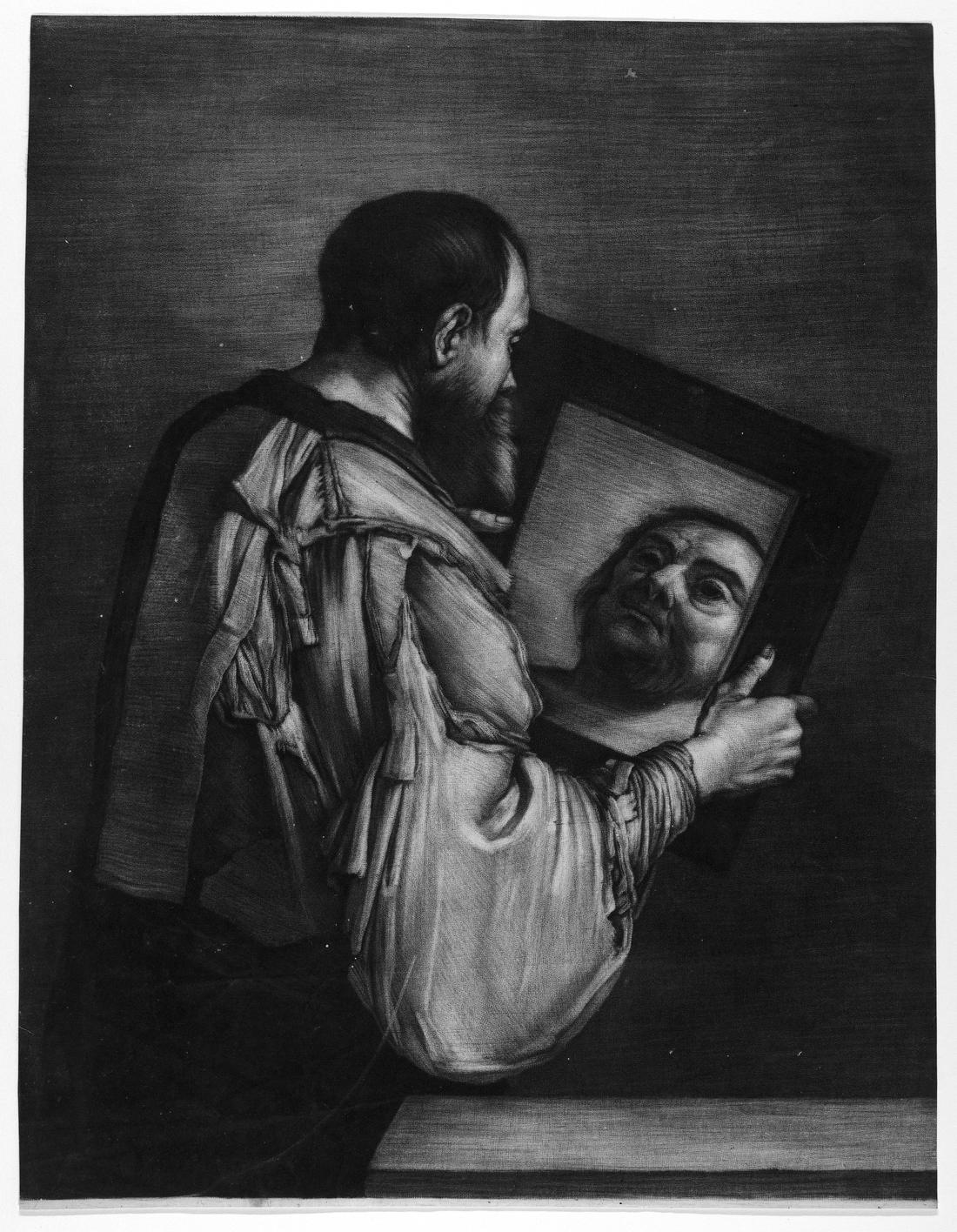
Painting: Bernard Vaillant after Jusepe de Ribera, Socrates Looking in a Mirror, 17th century. The Metropolitan Museum of Art. Public domain.