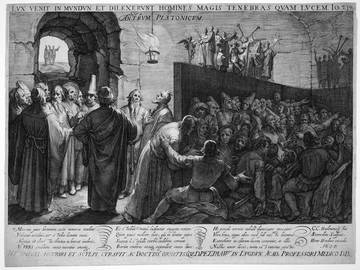
“I think, therefore I am.”
In plain words: The one thing I cannot doubt is that I am the one doing the doubting.
René Descartes, Discourse on the Method, Part IV, 1637
Ever bought something, and from then on only read the news that agreed with you?
2 · The storyHe doubted everything. Then he stayed in bed.
René Descartes liked to think lying down. He would stay in bed until late morning, warm and undisturbed, working out what could be known for certain. In 1637 he published a radical plan: believe nothing that can possibly be doubted.
His senses? They sometimes deceive, so out they went. His memory? Unreliable. Even the feeling of being awake: dreams feel real too while they last. In a later book he went further and imagined an evil demon whose only job was to deceive him about everything.Descartes, Meditations on First Philosophy, 1641.
When he had doubted everything he could, one thing remained. Someone was doing the doubting. I think, therefore I am. From that single certainty he rebuilt the rest, piece by piece, accepting only what had survived the doubt.
The method served him well. The Swedish climate did not. He died in Stockholm in 1650, after Queen Christina insisted on philosophy lessons at five in the morning. For a man who did his best thinking in bed, it was a cruel end.
3 · The tradeYou think, therefore you are… right?
Traders run Descartes’ method backwards. We decide first and look for reasons afterwards. You buy, and suddenly every chart, every forum thread and every analyst seems to agree with you. The ones who disagree are clearly not very bright.
This is not stupidity. It is how attention works. Information that agrees with us feels good, so we seek it out, remember it and trust it. Information that disagrees feels like a threat, so we skim it, forget it or explain it away.
Your phone helps. Every feed learns quickly what you like to read and serves you more of it. After a few weeks in a trade, you can live in a world where nobody at all thinks you are wrong. The market, unfortunately, does not read your feed.
4 · The testTwo rules. Four cards each. Which ones do you turn over?
Skip the testHow it works. Two short rounds. In each, you see a rule and four cards. Every card has information on both sides, but you can only see one side.
Your job. Pick the cards you must turn over to find out whether the rule is being broken. Only the ones you really need, then press “Check my cards”.
It was the same logic both times. “Drinking spirits” is “Followed setup”, and “Age 16” is “Lost”. Many people solve the bar and miss the trade. The bar rule is about permission, and people are good at spotting someone who breaks one. The trading rule is a claim about how things work, and there we look for agreement instead. Every belief about your own trading is of the second kind.
What it showsOpen it once you have tried the test
Checking a rule means looking for what could break it. With a rule about permission, like the one at the bar, most people do this naturally: they look for the cheat. With a claim about how things work, like a belief about your , most people look for confirmation instead: the winning trades. They feel like proof and prove nothing.
Fewer than one in ten pass. Clever people included.
The psychologist Peter Wason designed the original version of this test with letters and numbers. Fewer than one in ten people chose the right cards. Most picked the ones that could agree with the rule. Yet when Richard Griggs and James Cox dressed up exactly the same logic as a drinking-age rule, about seven in ten got it right. Psychologists still argue about why. A leading explanation: rules about permission, who may do what, come easily to us. Claims about how the world works do not.Wason, “Reasoning about a rule”, Quarterly Journal of Experimental Psychology, 1968. Griggs and Cox, “The elusive thematic-materials effect”, British Journal of Psychology, 1982.
In 1979, researchers at Stanford gave supporters and opponents of the death penalty the same two studies to read, one supporting each side. Both groups found the study that agreed with them more convincing, and both said their views had grown stronger.Lord, Ross and Lepper, “Biased assimilation and attitude polarization”, Journal of Personality and Social Psychology, 1979. Same evidence, opposite conclusions.
In markets, this is how a turns into a belief, and how a belief becomes very expensive to sell.
6 · The fixDoubt like Descartes, at least once per trade.
You do not need an evil demon. A notepad will do.
- Write the case against. Before you enter, write three reasons the trade could fail. If you cannot find three, you have not looked. You have only agreed.
- Read one opponent a week. Follow at least one serious voice who disagrees with your favourite view, and read them while you hold the position, not after you have closed it.
- Name what would change your mind. Write down the one observation that would make you exit. Then watch for that, not for more applause.
Write the case against, three times.
For your next three trades, or the next three you consider, write three reasons each could fail before you enter. Afterwards, note which of those reasons actually happened.
Send us a belief you hold, and the case against it.
ask@socratrades.com
No more carrier pigeons. The last one panicked at the first red candle and sold the letter at a loss.
Free. Answered in writing by real people; Socratrades is a character. General answers only: we don’t assess your situation or name instruments. Never published without your yes.Confirmation bias is the habit of seeking evidence that agrees with a position you already hold. In Wason’s card task, typically fewer than one in ten people choose correctly. When the same logic is framed as a drinking-age rule, about seven in ten solve it (Griggs and Cox, 1982). Test a belief by looking for what would break it.
Three questions readers ask
What is confirmation bias in trading?
Seeking, remembering and trusting information that supports a position you already hold, while explaining away what contradicts it.
What is the Wason selection task?
A logic puzzle with a rule and four cards: which must you turn over to test the rule? Typically fewer than one in ten solve the abstract version. As a drinking-age rule, about seven in ten do.
How do traders reduce confirmation bias?
Write three reasons the trade could fail before you enter, read one serious opposing voice while you hold, and write down what would make you exit.
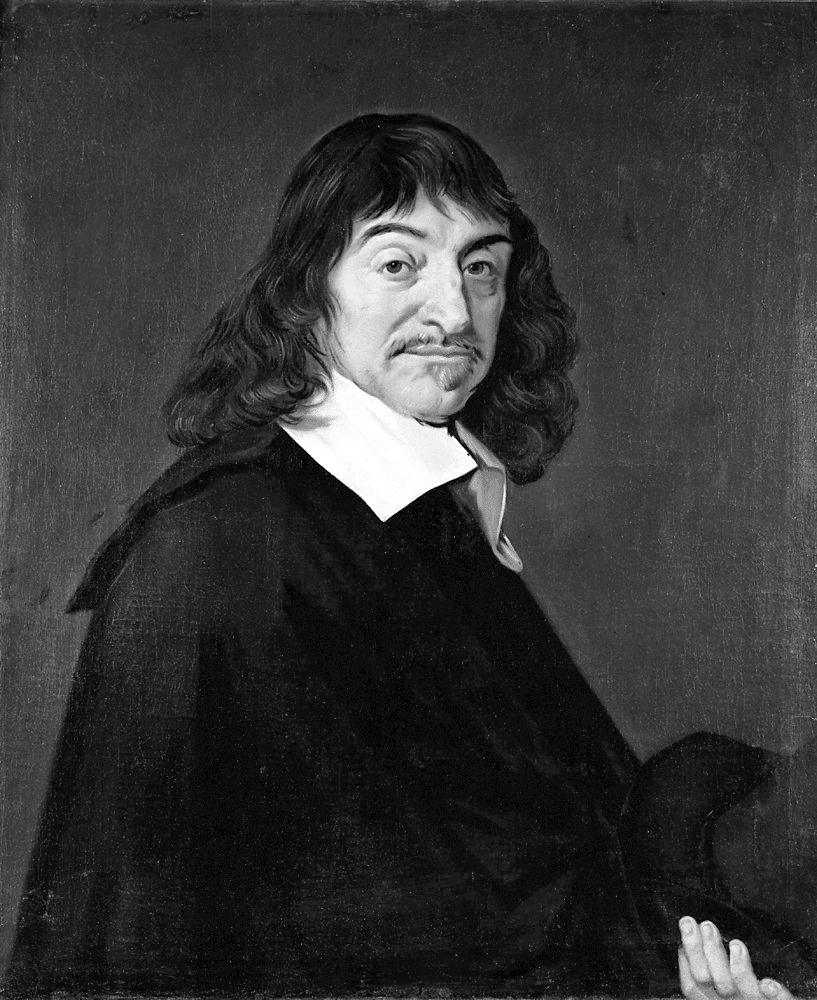
Painting: After Frans Hals, Portrait of René Descartes, c. 1649–75. Musée du Louvre, Paris. Public domain.